

Poker freeroll strategy for beginners starts before your first hand: verify your account, understand the lobby and enter a suitable game. This guide follows three newcomer profiles – a cautious first-timer, a mobile player and a bonus-focused regular – through registration, first deposits, bonus activation and early play. It also explains how Australian approaches differ from overseas norms. Always play within your limits and remember that even free-entry tournaments can involve real-money cash games.
Set Up Your Account and First Freeroll

Registration should be straightforward at a properly identified operator, but availability and rules differ between platforms. Australian players should check age eligibility, identity documents, payment options and the site’s terms before depositing. If verification fails, contact support rather than creating another account.
For your first session, start with a low buy-in or qualifying freeroll rather than a large tournament. Check the blind structure, ante, stack sizes, prize pool and play-clock carefully. Set a time limit and a loss cap, then stick to them. A useful starting point is to compare the advertised room details with what appears in the lobby, especially when the interface is busy.
Think of the registration process like checking gear before a fishing trip: a decent rod is no substitute for knowing the conditions. For broader Australian entertainment options, ice-fishing-online-au.com offers a separate point of comparison, but poker decisions still need their own rules and judgement.
First Deposits and Bonus Activation
The cautious first-timer should prioritise clarity over promotional value. Choose a payment method you recognise, use the correct Australian-dollar account details and save every receipt. Deposit only an amount you can afford to lose. For a new player, a modest first deposit may be more useful than chasing a large promotional offer because it limits exposure while allowing measured play.
Bonus-focused players should read the wagering conditions before activating anything. Check whether the bonus applies to cash games, qualifying tournaments or specific formats, and whether it expires quickly. A qualifying freeroll can test the platform without requiring a cash stake, yet it may still impose time limits or entry-fee rules. Never treat a bonus as withdrawable cash until its stated conditions are met.
Support should be easy to reach before you need it. Save the live-chat or help-centre details, and test the process with a small account query if necessary. Have your account number ready, but never send passwords, full card details or identity documents through informal channels.
You might also find this poker strategy for beginners helpful for understanding common terms and situations. Knowing the basics can make it easier to ask clear questions and get useful answers quickly.
Your First Real Poker Session
Beginners commonly mistake frequent play for productive play. Slow down when you are uncertain, protect your stack and make fewer, clearer decisions. In early positions, strong starting hands are usually easier to play; wait for favourable situations rather than entering marginal pots merely because the blinds are approaching.
The mobile player faces a different constraint: attention. Use one table at a time, disable unnecessary notifications and avoid playing while driving, drinking or managing sensitive work tasks. The tournament-focused regular can review hand histories after the session, note where pots were won or lost and adjust one habit at a time.
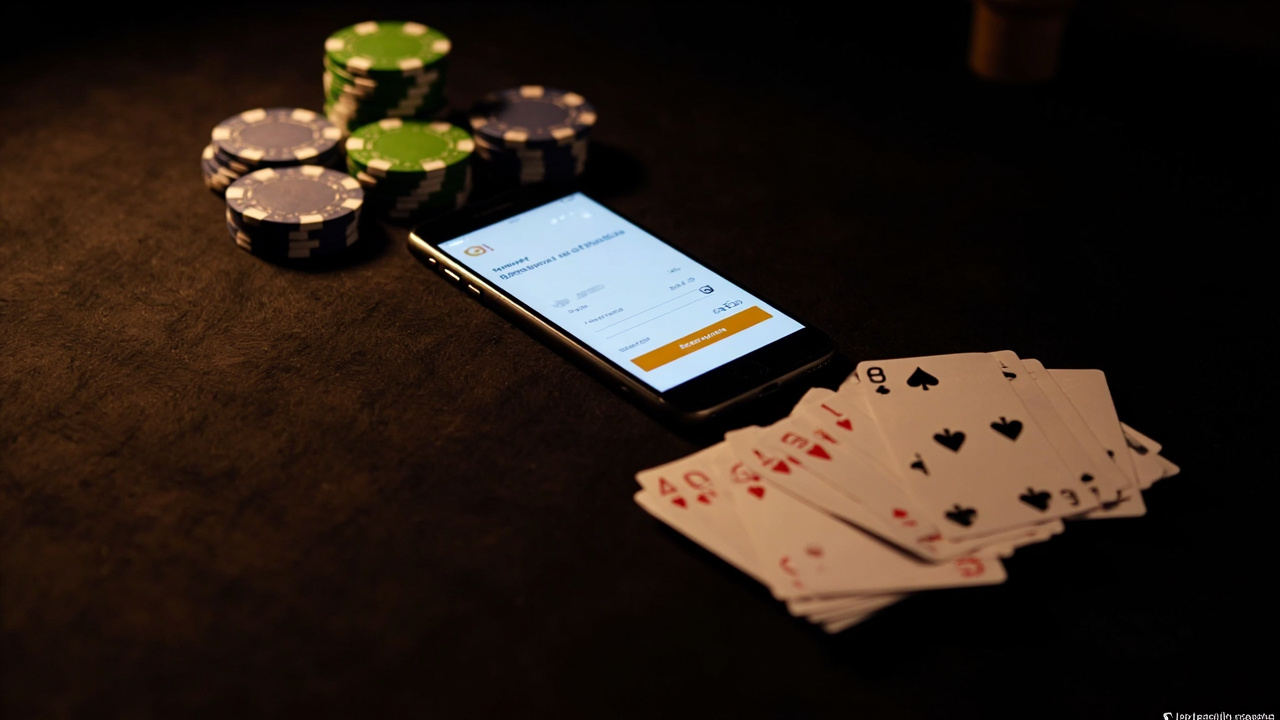
A sound test is to ask whether a decision makes sense without seeing your opponent’s cards. Avoid bluffing simply because a bluff “is due”. Use hand-strength tools as prompts, not instructions, and remember that no calculator removes uncertainty. Position, pot size and betting history matter too. If the app feels confusing, stop and learn the interface before risking funds.
Playing With a Smaller Stack
Short-stack play rewards discipline. When your stack is small, preserve it until you have a reason to contest the pot. Avoid speculative calls, and select games whose blinds and average stacks suit your bankroll rather than buying into a field far stronger than yours. Tournament structures also matter: deep stacks allow more flexibility, while shallow structures can magnify blind pressure.
Patience allows you to exploit mistakes and take favorable spots on your terms. For more strategies, visit ice-fishing-online-au.com. Keep your focus on value, and let weaker players chase the pots you pass over.
A comparison with global standards is revealing. In the US and UK, many players learn through tournament play and downloadable tools, while Australian beginners may be introduced through qualifying freerolls and local payment habits. European formats often feature varied buy-ins and rapid schedules. Down Under, the practical approach is to verify terms clearly, budget in AUD and avoid assuming that an overseas promotion applies locally.
Freerolls remain contests, not income. The gambler’s ruin theorem shows that a gambler betting against an infinitely rich house will eventually go broke. Free entry removes the initial ticket price, not the need for sound decisions.
“Players should treat every promotion as a set of conditions rather than a guaranteed outcome,” says Lachlan Henderson, Head of Analytics, Southern Capital Advisory. His caution matters because bonus mechanics can encourage play beyond a comfortable budget.
Quick Guide to Freeroll Terms
- Buy-in: The entry cost or stake assigned to a tournament.
- Blind: A forced bet posted before the action.
- Stack: The chips available to a player at a table.
- Ante: A small forced contribution from every player.
- Wagering requirement: The play needed before promotional funds become available under stated terms.
- Cash-out: Withdrawing eligible winnings from the player account under platform rules.
Start with a qualifying freeroll, set strict limits and learn one table before increasing stakes. Registration, verification and the first session should feel controlled, not pressured. Defo, the smarter move is fewer hands, clearer reasons and plenty of no worries.
